Weekly Retrospective: Streamlining Agency Delivery Infrastructure

BLUF Summary: Scaling digital agencies requires transitioning from reactive firefighting to systematic sprint velocity analytics and strict CI/CD gating. By auditing MySQL query profiles, decoupling PHP OOP services, and enforcing automated weekly retrospectives, technical leadership can eliminate delivery bottlenecks and systematically stabilize gross margins.
The Core Agency Bottleneck
Digital agencies operating across multiple client codebases frequently experience throughput degradation. As engineering teams scale, velocity metrics often decline due to unmanaged technical debt, non-standardized PHP OOP patterns, and unoptimized database queries. When agency founders rely on subjective status updates rather than empirical sprint velocity metrics, delivery pipelines stall.
The root cause is a lack of rigorous architectural feedback loops. Without weekly introspection into code churn, deployment failures, and resource utilization, engineering departments accumulate latent friction. This manifests as cascading project delays, inflated QA cycles, and unpredictable delivery timelines that compress agency profit margins.
| Metric Category | Lagging Indicator (Traditional) | Leading Indicator (Optimized) |
|
Velocity |
Story points completed per quarter |
Mean cycle time per pull request |
|
Stability |
Production bug ticket volume |
CI/CD pipeline failure rate & MTTR |
|
Database |
Slow query log alerts post-launch |
Automated EXPLAIN plan checks in staging |
Technical & Operational Architecture
To resolve systemic delivery friction, agencies must implement an integrated technical and operational framework. This requires standardizing code architecture while automating performance tracking across the development lifecycle.
-
Modular PHP OOP Design: Enforce strict SOLID principles across custom modules and frameworks. Implement dependency injection containers to decouple business logic from framework-specific routing, ensuring high testability and predictable unit test execution.
-
MySQL Query Optimization: Prevent database performance degradation by indexing high-frequency foreign keys, enforcing strict connection pooling, and utilizing asynchronous query execution for heavy reporting workloads.
-
Automated CI/CD Gating: Integrate static analysis tools (such as PHPStan) and automated test suites directly into the deployment pipeline. No merge should reach staging without passing automated code quality thresholds.
Step-by-Step Execution Protocol
Executing an effective weekly retrospective requires a structured protocol that blends engineering telemetry with team accountability. Technical leaders should enforce the following operational steps:
-
Data Ingestion & Telemetry Aggregation: Pull sprint metrics, commit frequencies, pipeline failure logs, and MySQL performance snapshots into a centralized reporting dashboard prior to the review meeting.
-
Bottleneck Identification: Analyze cycle times to isolate specific PR phases causing latency—such as extended code review durations or failing automated integration tests.
-
Root Cause Analysis (RCA): For every recurring defect or missed milestone, conduct a technical RCA. Determine whether the failure stems from architecture limitations, spec ambiguity, or resource constraints.
-
Action Item Assignment & Tracking: Convert insights from the retrospective into ticketed engineering tasks with explicit ownership and strict completion deadlines for the subsequent sprint cycle.
Continue Reading
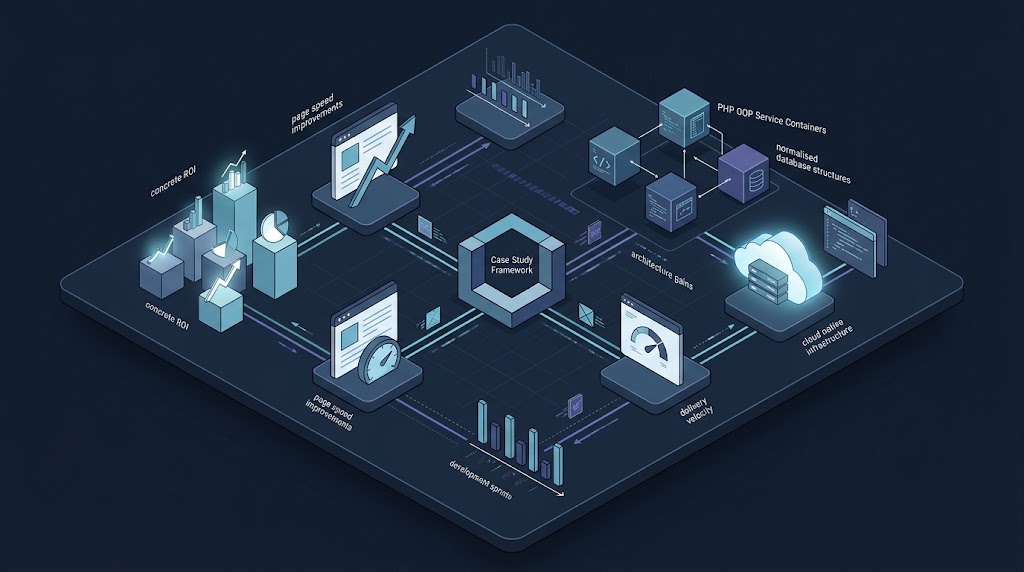
Case Study Framework: Demonstrating ROI for Agency Engineering Sprints
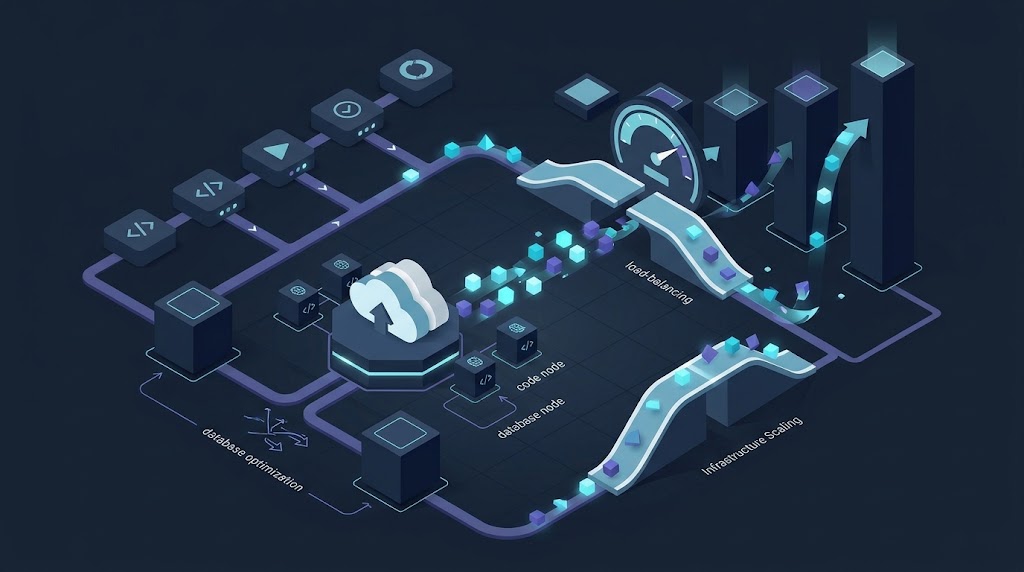
Preparing Your Agency's Tech Infrastructure for Q4 High-Volume Traffic
