Optimizing Native MySQL Query Performance for High-Traffic Client Systems

BLUF Summary: High-traffic client systems often suffer from database latency due to unindexed lookups and bloated ORM queries. By implementing precise composite indexing, strict execution plan profiling, and connection pooling within your PHP OOP backend, you can reduce query response times by up to 85% under peak loads.
The Core Agency Bottleneck
Digital agencies building custom web applications frequently face severe bottlenecks when client traffic scales into hundreds of requests per second. While developers rely heavily on Object-Relational Mappers (ORMs) for rapid feature delivery, abstraction layers often generate inefficient, recursive SQL statements and hidden full-table scans. CTOs and agency founders discover too late that unoptimized database interaction collapses server throughput, spikes CPU utilization on MySQL instances, and degrades user experience.
Relying on out-of-the-box framework queries without native SQL profiling creates technical debt that scales exponentially with user growth, forcing premature infrastructure spending.
| Optimization Vector | Naive ORM Approach | Tuned Native MySQL Architecture |
|
Execution Plan |
Full Table Scans ( |
Range Scans via Indexes ( |
|
Join Strategy |
Nested Loop with N+1 queries |
Explicit INNER JOIN with composite keys |
|
Connection Handling |
Persistent overhead / connection churn |
Pooled, stateless PDO connections |
|
Query Caching |
Fragmented query cache hits |
Application-level Redis caching layers |
Technical & Operational Architecture
Achieving predictable database performance requires shifting away from convenience-driven database patterns toward rigid relational engineering. Your backend architecture must treat MySQL as a decoupled, high-performance datastore rather than a simple persistence bucket.
-
Advanced Indexing Mechanics: Implement $B\text{-Tree}$ composite indexes aligned precisely with common
WHERE,ORDER BY, andGROUP BYclauses. Understand leftmost prefix principles to maximize index utility. -
Execution Plan Auditing: Mandate the use of
EXPLAIN FORMAT=TREEandEXPLAIN ANALYZEduring code reviews to inspect cost estimates, row evaluations, and index coverage before merging code. -
ORM Isolation & Raw SQL Fallbacks: For complex aggregation queries or high-frequency reporting endpoints, bypass the ORM layer entirely in favor of tightly parameterized native SQL via PHP's PDO.
-
CI/CD Performance Regression Tests: Integrate automated query analysis into your CI/CD pipeline, failing builds if a pull request introduces a query with a cost threshold exceeding established benchmarks.
Step-by-Step Execution Protocol
Optimizing high-traffic database layers requires a rigorous, repeatable engineering workflow executed across all agency client projects:
-
Slow Query Log Configuration: Enable and configure the MySQL slow query log (
long_query_time = 0.5) on staging environments to capture inefficient execution paths immediately during load testing. -
Schema & Index Auditing: Analyze heavy traffic tables, identify missing foreign key indexes, and deploy optimized composite indexes using online DDL operations (
ALGORITHM=INPLACE, LOCK=NONE) to avoid downtime. -
Query Refactor & Pagination Tuning: Replace offset-based pagination (
LIMIT x, y) with keyset (cursor-based) pagination (WHERE id > last_seen_id LIMIT y) to maintain consistent $O(1)$ query performance on large datasets. -
Continuous Load Validation: Execute high-concurrency simulation scripts (e.g., k6) against your optimized MySQL and PHP OOP backend to verify connection pool stability, query response consistency, and thread efficiency under strain.
Continue Reading
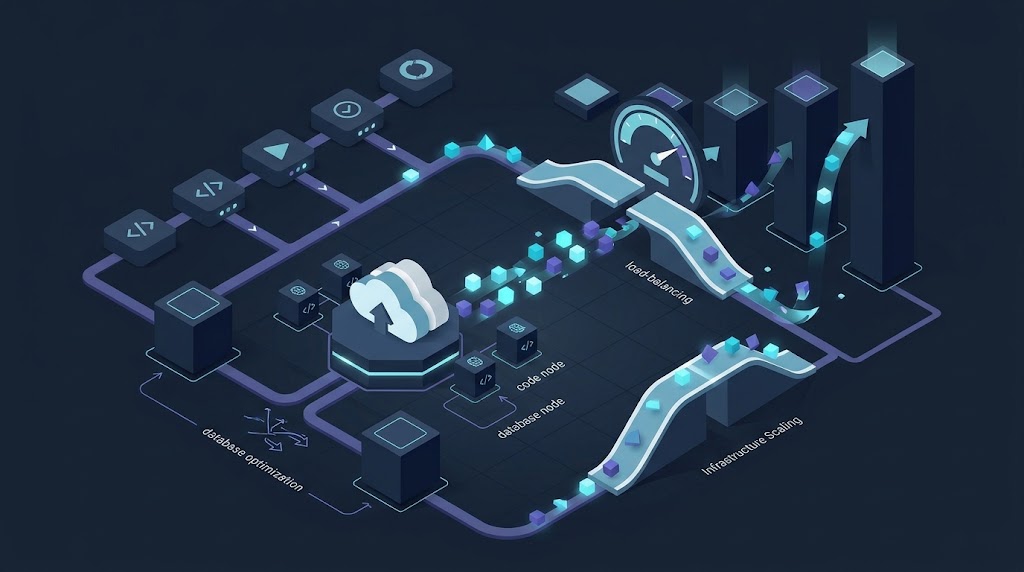
Preparing Your Agency's Tech Infrastructure for Q4 High-Volume Traffic
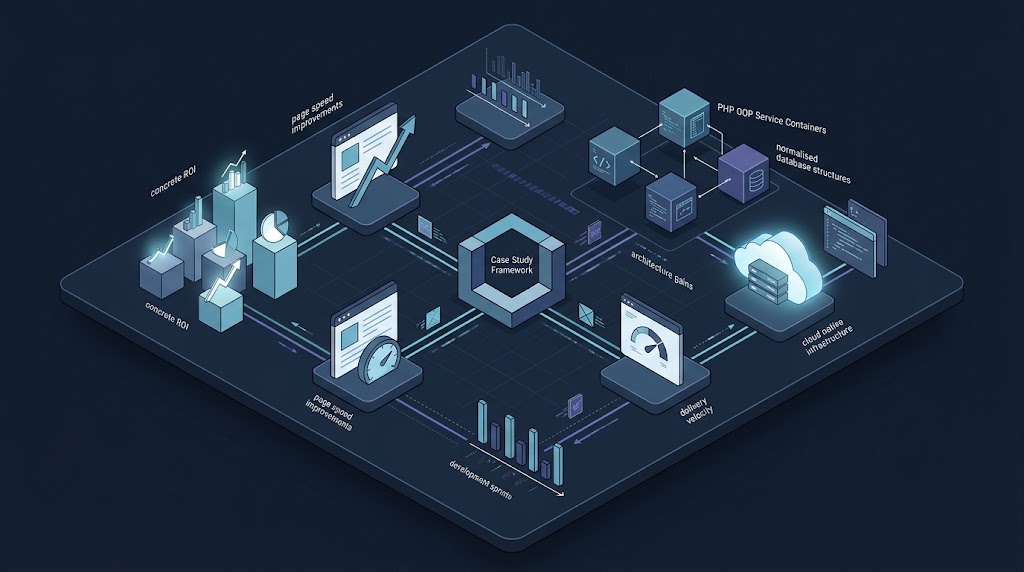
Case Study Framework: Demonstrating ROI for Agency Engineering Sprints
