All articles
HOME
/
BLOG
/
API ARCHITECTURE
API Architecture
Designing Robust RESTful APIs for Custom SaaS Platforms
30 Sep 2026
3 min read
REST API · API DESIGN · SAAS ARCHITECTURE · WEB INTEGRATION

Designing robust RESTful APIs on top of a secure PHP OOP and MySQL backend ensures that custom SaaS platforms scale seamlessly and integrate effortlessly with third-party clients. By enforcing strict resource-based routing, stateless authentication, and automated CI/CD pipelines, engineering teams can eliminate integration friction and secure enterprise-grade reliability.
The Core Agency Bottleneck
When building custom SaaS platforms for agency clients, ad-hoc API design often leads to brittle integrations, performance degradation, and ballooning maintenance costs. Engineering teams frequently encounter severe architectural roadblocks:
-
Inconsistent Endpoints: Poorly structured URL routing and verb usage confuse client developers and break third-party integrations.
-
Database Contraction and Locking: Unoptimized queries hitting MySQL directly from uncontrolled endpoints degrade overall platform responsiveness.
-
Security Vulnerabilities: Weak token management, missing rate limiting, and inadequate input validation expose sensitive enterprise data to attack vectors.
Technical & Operational Architecture
A high-performance RESTful API architecture decouples client consumption from server-side business logic. Leveraging clean PHP Object-Oriented Programming (OOP), the application utilizes a service layer pattern to handle transactional business rules, while MySQL handles structured data persistence with optimized indexing. Authentication is managed statelessly via secure JSON Web Tokens (JWT), and automated validation pipelines guarantee contract compliance before production deployment.
| Metric / Dimension | Ad-Hoc API Approach | Robust RESTful SaaS Architecture |
| Routing & Conventions | Custom RPC-style actions (/getUserData.php) |
Standardized Resourceful Routing (GET /api/v1/users) |
| Data Persistence | Direct, unindexed queries causing table locks | Indexed MySQL repositories with DTO mapping and caching layers |
| Versioning & Lifecycle | Breaking changes pushed directly to production | Header or URI-based versioning (/api/v1/) with deprecation policies |
| CI/CD & Contract Testing | Manual Postman checks and ad-hoc staging tests | Automated API schema validation and PHPUnit integration pipelines |
Step-by-Step Execution Protocol
-
API Routing and Controller Design (PHP OOP): Implement a clean router that maps HTTP methods (
GET,POST,PUT,DELETE) to dedicated controller classes, strictly adhering to resource naming conventions and returning standardized JSON payloads. -
Database Layer Optimization (MySQL): Design normalized MySQL schemas with appropriate foreign key constraints and compound indexes. Implement a repository layer using PDO prepared statements to completely mitigate SQL injection risks.
-
Security and Rate Limiting: Enforce stateless JWT authentication, implement HMAC signature verification for webhook deliveries, and deploy token-bucket rate limiting at the reverse-proxy layer to prevent DDoS and brute-force attacks.
-
CI/CD Pipeline and Automated Testing: Configure a GitHub Actions workflow to run comprehensive PHPUnit feature tests, validate OpenAPI/Swagger documentation compliance, and automatically deploy zero-downtime releases to production servers.
#REST API
#API Design
#SaaS Architecture
#Web Integration
Continue Reading
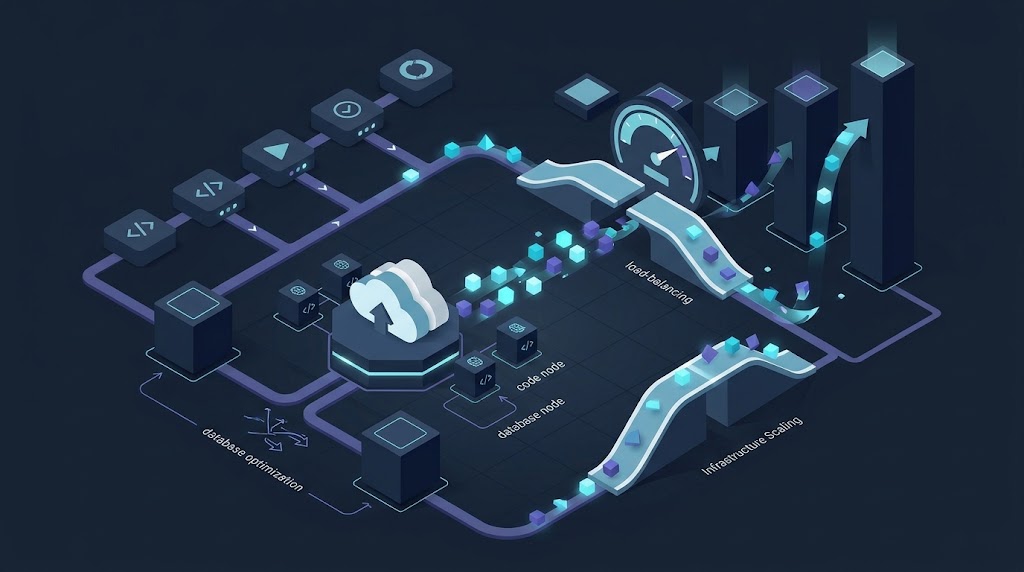
Software Engineering
Preparing Your Agency's Tech Infrastructure for Q4 High-Volume Traffic
18 Oct 2026
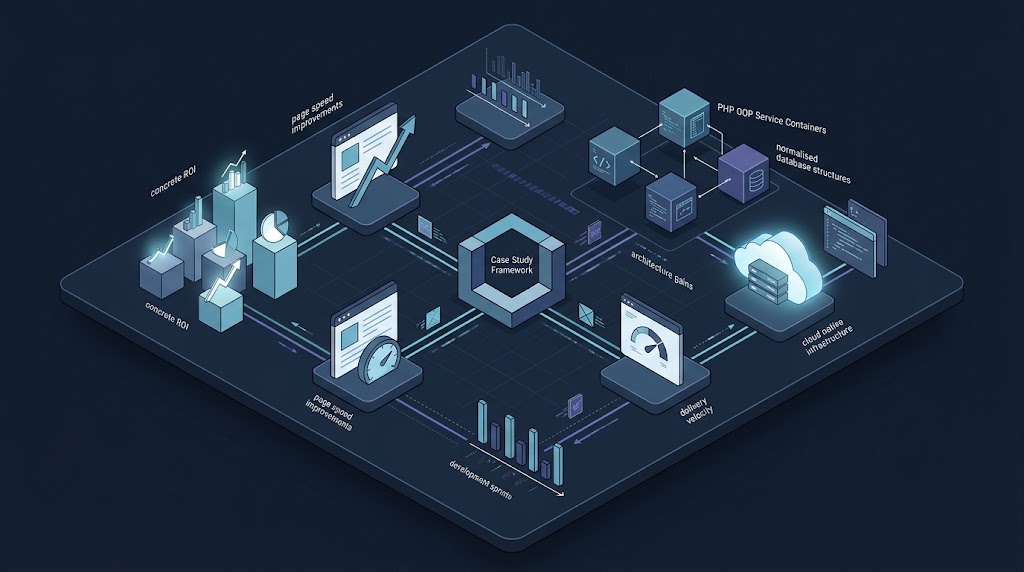
Insights & Case Studies
Case Study Framework: Demonstrating ROI for Agency Engineering Sprints
17 Oct 2026

Quality Assurance
The Hidden Costs of Poor Developer Documentation in Client Handouts
16 Oct 2026